
Key Takeaways
- Sentiment and online reputation don’t drive AI citations the way most brands assume. Some data even shows a negative correlation.
- Format isn’t the deciding factor. 64 percent of AI citations come from ordinary pages, not listicle, how to, or comparison content.
- On commercial-intent prompts, 82 percent of citations go to third parties and just 3 percent to owned pages.
- Owned citations, where an AI/LLM result goes to a link directly on your domain, delivered the single strongest visibility lift in the data.
- Despite new AI model releases causing volatility, inconsistent AI search visibility from one quarter to the next is usually a brand problem, not a platform problem. Brands that win on one AI platform tend to win on all of them.
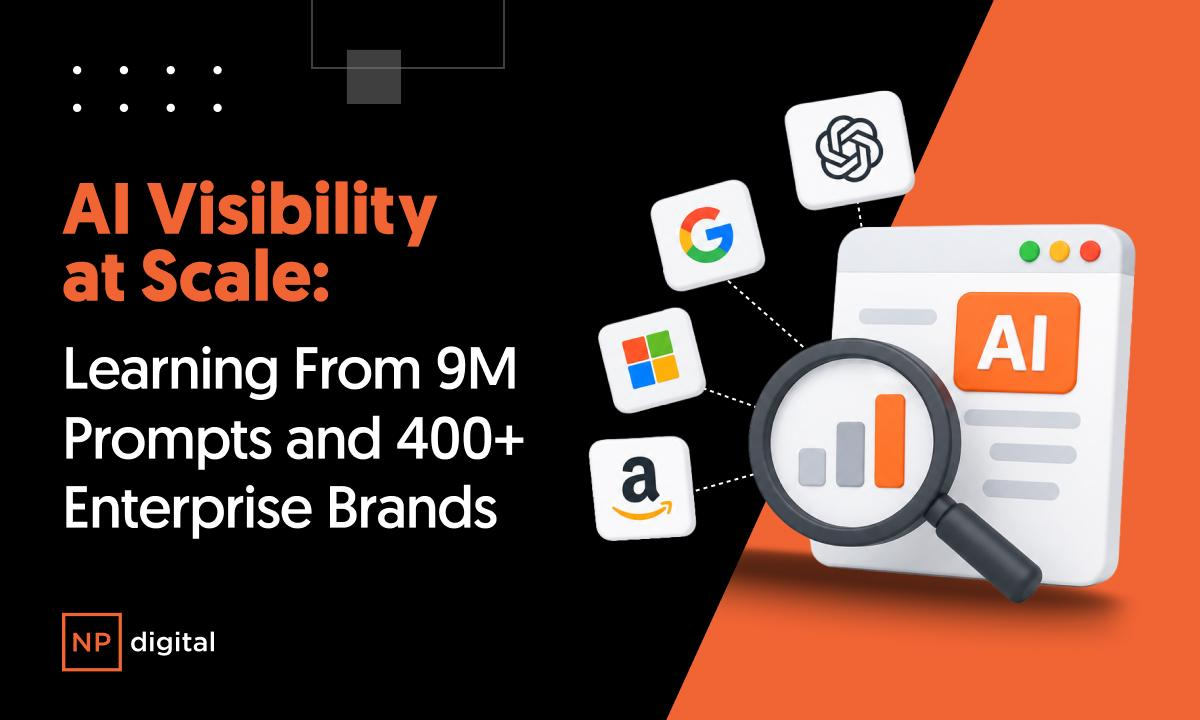
At brightonSEO 2026, I presented AI search visibility research built from 9 million AI answers across 9 platforms and 400+ enterprise brands, the same dataset behind this piece. The feedback I got from conference attendees in the days that followed made one thing clear: most of what marketers assume about AI search visibility hasn’t actually been tested against real data.
This comes from real client and competitor data tracked across a wealth of company times, from ecommerce to finance to B2B software,.
Nine assumptions keep showing up in GEO pitches, LinkedIn posts, and Slack threads, and none of them hold up once you check them against this data. Fundamentals beat hacks, and data beats opinion. Here’s what actually drives AI citations, and what to do differently for your GEO strategy starting now.
Myth 1: Positive Sentiment Drives More AI Citations
A lot of ORM budgets are allocated in 2026 based on the idea that better reviews and healthier brand sentiment should earn a brand more AI citations.
The data says otherwise. Across five major platforms, ChatGPT, AI Mode, Gemini, Copilot, and Grok, sentiment correlates negatively or flat with citation frequency. Brands with rockier reputations often get cited more, not less.
The likely mechanism: these models retrieve based on how often and how deeply a brand gets discussed, not on how people feel about it. Controversy generates more discussion than a quiet, well-liked brand ever does, and more discussion means more material for a model to pull from when it builds an answer.
Stop treating AI visibility as a reputation-management outcome. If you’re funding ORM work hoping it moves your citation count, it likely won’t, at least not directly. Sentiment still matters for conversion, trust, and E-E-A-T, so keep investing in it. Just don’t expect it to explain your AI visibility numbers.
Myth 2: Listicles, Comparisons, and How-Tos Win the Most AI Citations
“Structure it as a listicle and AI will cite you” has become the default logic behind a lot of “AI-optimized” content briefs.
64 percent of AI citations actually come from ordinary pages, not those formats.
The reason: these models pull whichever passage best answers the prompt, format aside. A thorough category page or a detailed guide often answers more prompts than a thin, formulaic list built only to be cited.
Stop treating AI optimization as a formatting exercise. Make your regular pages more thorough instead, with better question coverage, more specifics, and original data the model can actually pull from.
Myth 3: Your Transactional Pages Control Your Transactional Prompts
Who knows a product better than the company selling it? That logic is why so many brands assume their own product and pricing pages would carry the most weight on their commercial-intent prompts.
On commercial-intent prompts, 82 percent of citations go to third parties. Owned pages make up just 3 percent, compared to as much as 13 percent owned coverage on navigational and informational queries.
At the exact moment someone is deciding whether to spend money, these models default to treating anyit seems your own pricing page is the last place they look for confirmation
Aim digital PR investment specifically at bottom-of-funnel, commercial-intent topics — pricing comparisons, category roundups, best-for placements — rather than only top-funnel awareness moments.
Myth 4: Reddit Is the Highest-Impact Third-Party
Reddit has become close to gospel in SEO/AI search circles as the single most impactful third-party channel for AI visibility right now.
YouTube actually delivers the strongest lift at 2.8x, ahead of LinkedIn (2.7x), Reddit (2.4x), G2 (1.9x), and Gartner (1.6x).
YouTube is underused as an AI-visibility surface because most brands still treat it as a brand content channel rather than a citationguage document, exactly the kind of content these systems retrieve well
Build a YouTube SEO roadmap backed by search demand data, prompt volume data, and AI visibility tracking. Full transcripts, descriptive titles, and consistent brand mentions throughout the video, not just in the description.
Myth 5: Third-Party
I’ve watched brands look at how much third-party content dominates AI citations and start pulling back their own website investment entirely.
That’s the wrong read. Owned citations make up a small share of the mix, but when a brand’s own content does get cited, its AI visibility rate jumps 5x, the single strongest lift anywhere in the dataset, ahead of even YouTube’s 2.8x.
Don’t pull back on owned content. Build and optimize pages specifically around the query types the data shows are already earning owned citations, and treat each one as disproportionately valuable relative to the rest of your site.
Myth 6: Once You Earn a Citation, You’re in the Model for Good
A lot of teams set targets and report wins to leadership as though a citation, once earned, sticks around for good, offering real impact long term.
Up to 58 percent of citations never reappear, though. More than half of what a brand wins, it wins once. The split that matters more: owned pages last 3 to 9 times longer than third-party citations.
Judge content by its decay curve, not a single snapshot right after it goes live. Check citations on a weekly, monthly, and quarterly cadence, and build budget and business cases around what sustains, not what spikes.
Myth 7: A Citation Is a Citation, and It All Builds the Brand
Any AI citation of a brand’s content should build that brand, or so the thinking goes, regardless of whether the AI’s answer actually says the brand’s name out loud.
Up to 75 percent of AI answers that cite a brand’s page never actually say the brand’s name. The model uses the content and the research behind it without giving the brand exposure teams expect in return.
Stop reporting citation growth alone as a win. Report on visibility and share of voice instead. A rising citation count that isn’t paired with stronger AI visibility/SOV, more branded searches, or more direct traffic isn’t actually working for the brand yet.
Myth 8: Inconsistent AI Visibility Is a Platform Problem
“Some platforms are just unstable” is the explanation I hear constantly for a bad month or quarter, and some published research has backed it up.
But across 9 million AI answers, brand-level visibility volatility, a range of 0.04 to 1.0, dwarfs platform-level volatility, a range of 0.08 to 0.32. On the same platform, in the same week, some brands stay rock solid while others spike and dip. The variable driving that difference is the brand, not the platform.
The most stable brands in the dataset share two traits: deep topical coverage and strong third-party mentions.
If visibility starts fluctuating, start by auditing the brand’s content and entity authority first, then looking to coverage gaps before assuming platform instability is the issue.
Myth 9: Brands Need a Completely Different Strategy for Each AI Platform
Schema tricks for one engine, statistics for another: that’s the playbook a lot of teams think they need, one fundamentally different strategy per AI platform.
High performers stay high performers consistently across every platform measured. Top brands show roughly 4x steadier performance than the rest, everywhere at once.
The underlying signals that create a winner, solid content, third-party corroboration, offsite authority, are the same everywhere. A model doesn’t reward a brand differently for being thorough on ChatGPT versus Gemini.
Focus on fundamentals first, since they transfer across every platform. Depth and freshness of content, earned bottom-funnel third-party coverage, and video with strategic transcripts matter more than GEO tricks built for a single engine.
Does having better sentiment or reviews get you cited more by AI?
Not directly. Across five major AI platforms, sentiment correlates negatively or flat with citation frequency, since these models retrieve based on how much a brand is discussed, not how well it’s liked. Sentiment still matters for conversion and trust, just not for citation volume.
Do listicles, comparison content, and how-tos win the most AI citations?
No. 64 percent of AI citations come from ordinary pages, not those formats. AI models pull whichever passage best answers the prompt, and a thorough regular page often does that better than a thin list built only to be cited.
Does my own site have more influence on my highest-value, transactional prompts?
Less than most brands assume. On commercial-intent prompts, 82 percent of citations go to third parties and only 3 percent to owned pages. At the point someone is about to spend money, AI models tend to trust anyone but the seller.
Which third-party citation
YouTube, at 2.8x, ahead of LinkedIn (2.7x), Reddit (2.4x), G2 (1.9x), and Gartner (1.6x). Video transcripts are large, well-structured, spoken-language documents that these models retrieve especially well.
If third-party
Yes, and arguably more than ever. Owned citations are rarer, but when a brand’s own content does get cited, its AI visibility rate jumps 5x, the strongest lift of any
Once you earn a citation, does it stick around?
Usually not for long. Up to 58 percent of citations never reappear after their first showing. Owned pages last 3 to 9 times longer than third-party citations, which is another reason owned content is worth the investment.
If an AI engine cites your page, does it also name your brand?
Often not. Up to 75 percent of AI answers that cite a brand’s page never actually say the brand’s name. That’s why citation count alone is a weak success metric; visibility and share of voice matter more.
Is inconsistent AI visibility a platform problem or a brand problem?
A brand problem, in almost every case. Brand-level visibility volatility (0.04 to 1.0) is far wider than platform-level volatility (0.08 to 0.32). The most stable brands share deep topical coverage and strong third-party mentions.
Do brands need a completely different strategy for each AI platform?
No. Top-performing brands stay roughly 4x steadier than average across every platform measured, because the fundamentals that earn AI visibility, content depth, third-party coverage, built authority, transfer everywhere rather than requiring a platform-specific playbook.
Conclusion
AI visibility, like SEO before it, isn’t about gaming a platform. It’s about being a genuinely trusted authority and a
Every one of these nine myths points back to the same idea: the work practitioners already know how to do, building depth, earning real third-party coverage, establishing authority, still counts. It counts more than any GEO shortcut circulating in a LinkedIn post right now. The data just gives you a clearer map of where to point that work first.
