



Community Article
Community articles are authored by SitePoint Premium contributors. Content is screened before publication, and SitePoint reserves the right to moderate or remove articles that violate our guidelines. Views expressed are those of the authors and do not necessarily reflect those of SitePoint.
How AI-Powered APIs and Data Extraction Are Reshaping Web Development
SASaifullah AdenwallaPublished inAI·APIs·Web·
August 14, 2026
The AI briefing for Developers
Stay up to date with AI tools, model releases, and developer workflows that matter.
Weekly. Free. One click to leave.
SitePoint Premium
Stay Relevant and Grow Your Career in Tech
- Premium Results
- Publish articles on SitePoint
- Daily curated jobs
- Learning Paths
- Discounts to dev tools
7 Day Free Trial. Cancel Anytime.
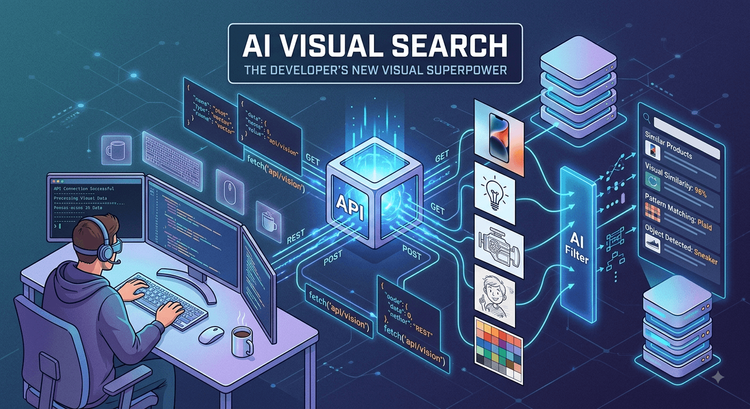
The software engineering landscape is undergoing a massive shift. Where web development once relied heavily on manual data structures and rigid backend pipelines, modern developers are leveraging artificial intelligence and dynamic data feeds to build self-learning, context-aware web applications.
As artificial intelligence models evolve from basic autocomplete tools to complex agentic workflows, the real differentiator for developers is no longer just the model itself—it is the quality and speed of the data feeding into it.
The Evolution of AI-Driven Data Pipelines
For modern full-stack applications, static databases are no longer sufficient. AI features—ranging from real-time dynamic search to intelligent recommendation engines—require continuous access to fresh, structured external data.
Integrating third-party extraction tools like Dataford directly into backend microservices allows development teams to turn unstructured web content into clean, machine-readable payloads. Instead of spending weeks building fragile, custom web scrapers that break on every DOM update, developers can connect clean data APIs directly to vector databases and Large Language Models (LLMs).
// Example: Processing structured external data feeds for AI model consumption
async function fetchAndProcessData(endpoint) {
const response = await fetch(endpoint, {
headers: { 'Authorization': `Bearer ${process.env.API_KEY}` }
});

const rawData = await response.json();

// Clean and format payload for vector embedding generation
return rawData.map(item => ({
title: item.title,
content: item.body_text,
timestamp: item.extracted_at
}));
}
Accelerating Sprint Velocity with Modern Dev Tools
Integrating AI APIs into standard engineering workflows dramatically improves team velocity. By delegating complex tasks like natural language processing, semantic document analysis, and dynamic data enrichment to specialized endpoints, engineers can keep their codebases modular and focused on business logic.
Combining automated data retrieval with established agile software development methodologies enables cross-functional teams to iterate rapidly. Product managers and engineers can test hypotheses, refine prompt pipelines, and ship MVP features in days rather than months.
Building Scalable Architectures for AI Web Apps
As developer teams incorporate multimodal capabilities into web applications, maintaining clean architectural principles becomes critical. Fetching, parsing, and embedding data in real-time introduces potential performance bottlenecks if not managed correctly.
To ensure low latency and high reliability, modern engineering teams adopt asynchronous processing patterns:
- Background Task Queues: Offloading heavy extraction and vector processing tasks to background workers (e.g., BullMQ, Celery).
- Smart Caching Layers: Utilizing Redis or edge-cached memory stores to avoid redundant API requests for frequently accessed data.
- Resilient Architecture: Applying proven web development strategies to handle third-party endpoint rate limits and graceful degradation.
Furthermore, keeping backend dependencies strictly typed and well-structured using modern JavaScript development practices prevents runtime errors as data schemas evolve.
Final Thoughts
The convergence of artificial intelligence, robust data extraction pipelines, and modern web development stack paradigms is giving developers unprecedented leverage. By offloading complex data gathering to dedicated specialized platforms and delegating cognitive tasks to AI APIs, engineering teams can ship smarter, more adaptive applications at scale. The future of web development isn’t just about writing code—it’s about orchestrating intelligent data flows.
