


Close Menu
ToolTechBlogToolTechBlog

    Subscribe to Updates

    Get the latest creative news from FooBar about art, design and business.

    What's Hot

    Why you shouldn’t depend on GTA 6 to auto-save

    November 21, 2026

    Signal to restrict screenshots over AI agent concerns – again

    November 21, 2026

    What Is BIO Tagging and How to Use It for Document AI Training Data

    November 21, 2026
    Facebook X (Twitter) Instagram
    ToolTechBlogToolTechBlog
    • Home
    • AI Tools
    • Web Hosting
    • Tech
    • Digital Marketing
    • Business Software
    • VPN & Cybersecurity
    ToolTechBlogToolTechBlog
    Home»Tech»Do USB extenders really work and are they safe to use?
    Tech

    Do USB extenders really work and are they safe to use?

    Tool Tech TeamBy Tool Tech TeamSeptember 22, 2026No Comments3 Mins Read
    Facebook Twitter Pinterest Telegram LinkedIn Tumblr WhatsApp Email
    Do USB extenders really work and are they safe to use?
    Share
    Facebook Twitter LinkedIn Pinterest Telegram Email

    Getting a longer USB connection is easy. Getting the connection you actually expected takes a little more care.

    USB extenders do work. The less convenient answer is that the term “USB extender” can mean anything from a passive cable to an active repeater or a CAT/fiber extender. They all extend the USB connection, but don’t necessarily preserve the same speed, power or features. They’re generally safe to use, as long as a unit is properly rated hardware within its stated limits.

    This is important when you get past connecting a keyboard and mouse. A 4K webcam, external SSD or USB-C dock can require significantly more bandwidth; a dock can also transmit video and power. An extender can thus “work” while switching to a slower USB mode, disconnecting from time to time or losing a feature you thought you had. 

    Distance decides what kind of USB extender you need
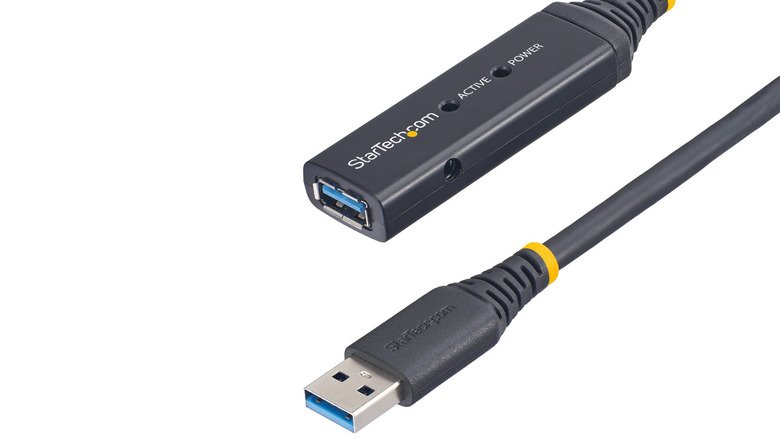
    StarTech active USB extension cable with USB-A male and female connectors.

    A passive extension cable simply adds more length between the computer and device. This is okay for shorter runs, but as the cable length increases, maintaining signal integrity becomes difficult. USB 2.0 is fairly tolerant up to approximately 16 feet (5 meters) and passive USB 3.x runs are typically kept to around 10 feet (3 meters) before active hardware becomes the more intelligent choice.

    Active extenders include electronics to regenerate the signal. For instance, StarTech offers a 33-foot active USB 3.2 Gen 1 cable with a 5 Gbps speed rating and says two of them can be daisy-chained for a ~66-foot run. Icron’s Raven 3104 takes it a step further, delivering up to 5 Gbps speeds at a max distance of 328 feet, using a CAT 6a or CAT 7 cable.

    The device at the other end is still important. Compared to a keyboard, devices like storage drives, VR headsets, webcams and docks are more likely to reveal connection issues, as they may need more bandwidth or multiple USB features simultaneously. Shopping is even more puzzling with USB-C, as the connector itself provides little indication of the speed or capabilities behind it.

    Power is a separate problem from data
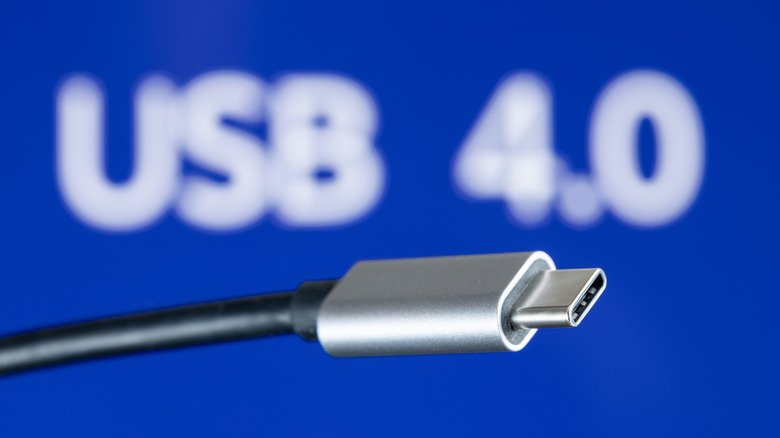
    USB-C cable in front of a blue USB 4.0 background.

    Power transmission is where only checking the connector on the box can become costly. Up to 240W is possible with USB Power Delivery, but the source, device and cable must all support that power level. The source advertises its capabilities and the connected device requests power before the higher-power contract is established. USB-IF requires USB-C-to-USB-C cables passing its compliance program to carry either a 60W or 240W power marking, and all except USB 2.0 cables must also show their supported data rate.

    For a given cable, those numbers may not be close at all. Anker offers a 10-foot USB-C cable with 240W charging support, but its data transfer speed tops out at 480Mbps. Icron’s 328-foot extender does the opposite: It supports up to 5Gbps, but offers just 6W per remote USB port. There’s no guarantee of fast data with fast charging, and vice versa.

    Passive USB-C male-to-female extensions need extra caution. C-to-C cables, Type-C-to-legacy cables and adapter assemblies are listed in USB-IF’s passive Type-C compliance document, while generic male-to-female Type-C extension cables are not. But that doesn’t mean USB extenders are illegal. 

    If you’re looking for USB4, display output or high-power charging, getting the USB-C connectors to fit together is just the beginning of the compatibility test. If the actual issue is that <a href="https://tooltechblog.com/a-tool-your-team-runs-or-a-service-that-runs-for-you/” title=”A tool your team runs, or a service that runs for you?”>your charger doesn’t reach the wall outlet, a properly rated AC extension cord may be cleaner for a temporary setup than extending the USB connection itself.

    extenders really safe They work
    Share. Facebook Twitter Pinterest LinkedIn Tumblr Email
    Tool Tech Team
    • Website

    Related Posts

    Why you shouldn’t depend on GTA 6 to auto-save

    November 21, 2026

    The Internet Archive’s workers are unionizing

    November 20, 2026

    OpenAI is testing Dots personal agents on its $20 per month Plus tier

    November 20, 2026

    Meta Quest adds 3D movie purchases and rentals to its TV app

    November 19, 2026

    Elon Musk accuses Ukraine of being ‘untruthful’ about Starshield disruptions

    November 19, 2026

    Rockstar just settled a major question about GTA 6’s controversial FPS decision

    November 18, 2026
    Leave A Reply Cancel Reply

    Top posts
    Tech

    Why you shouldn’t depend on GTA 6 to auto-save

    By Tool Tech Team
    Business Software

    Signal to restrict screenshots over AI agent concerns – again

    By Tool Tech Team
    Web Hosting

    What Is BIO Tagging and How to Use It for Document AI Training Data

    By Tool Tech Team
    Editors Picks

    Why you shouldn’t depend on GTA 6 to auto-save

    November 21, 2026

    Signal to restrict screenshots over AI agent concerns – again

    November 21, 2026

    What Is BIO Tagging and How to Use It for Document AI Training Data

    November 21, 2026

    Startup sues Apple in India over tap-to-share contacts feature

    November 21, 2026
    About Us

    Welcome to ToolTechBlog, your trusted source for the latest insights, reviews, and practical guides on AI tools, business software, cybersecurity, web hosting, and consumer technology.
    Our mission is simple: to help individuals, entrepreneurs, freelancers, students, and businesses discover the right digital tools to improve productivity, streamline workflows, and make informed technology decisions.

    Our Picks

    Why you shouldn’t depend on GTA 6 to auto-save

    November 21, 2026

    Signal to restrict screenshots over AI agent concerns – again

    November 21, 2026

    What Is BIO Tagging and How to Use It for Document AI Training Data

    November 21, 2026
    Top Reviews

    The AI Hype Index: Unsexy AI

    July 29, 2026

    What it is and How to Fix it

    July 29, 2026

    LG to Ban Residential Proxies from Smart TV Apps

    July 29, 2026

    © 2026 tooltechblog.com. All rights reserved. Designed by DD.

    • About Us
    • Contact Us
    • Terms and Conditions
    • Privacy Policy
    • Disclaimer

    Type above and press Enter to search. Press Esc to cancel.