


Close Menu
ToolTechBlogToolTechBlog

    Subscribe to Updates

    Get the latest creative news from FooBar about art, design and business.

    What's Hot

    Microsoft’s Copilot app adds Office, natural coding and automation

    September 25, 2026

    For months, OpenAI’s agent swarms have been attacking online databases to find obscure facts

    September 25, 2026

    How to Build and Deploy a Production

    September 25, 2026
    Facebook X (Twitter) Instagram
    ToolTechBlogToolTechBlog
    • Home
    • AI Tools
    • Web Hosting
    • Tech
    • Digital Marketing
    • Business Software
    • VPN & Cybersecurity
    ToolTechBlogToolTechBlog
    Home»Tech»Do USB extenders really work and are they safe to use?
    Tech

    Do USB extenders really work and are they safe to use?

    Tool Tech TeamBy Tool Tech TeamSeptember 22, 2026No Comments3 Mins Read
    Facebook Twitter Pinterest Telegram LinkedIn Tumblr WhatsApp Email
    Do USB extenders really work and are they safe to use?
    Share
    Facebook Twitter LinkedIn Pinterest Telegram Email

    Getting a longer USB connection is easy. Getting the connection you actually expected takes a little more care.

    USB extenders do work. The less convenient answer is that the term “USB extender” can mean anything from a passive cable to an active repeater or a CAT/fiber extender. They all extend the USB connection, but don’t necessarily preserve the same speed, power or features. They’re generally safe to use, as long as a unit is properly rated hardware within its stated limits.

    This is important when you get past connecting a keyboard and mouse. A 4K webcam, external SSD or USB-C dock can require significantly more bandwidth; a dock can also transmit video and power. An extender can thus “work” while switching to a slower USB mode, disconnecting from time to time or losing a feature you thought you had. 

    Distance decides what kind of USB extender you need
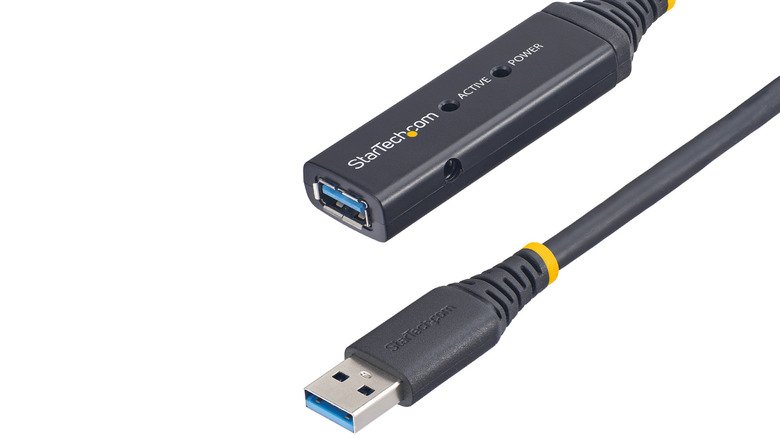
    StarTech active USB extension cable with USB-A male and female connectors.

    A passive extension cable simply adds more length between the computer and device. This is okay for shorter runs, but as the cable length increases, maintaining signal integrity becomes difficult. USB 2.0 is fairly tolerant up to approximately 16 feet (5 meters) and passive USB 3.x runs are typically kept to around 10 feet (3 meters) before active hardware becomes the more intelligent choice.

    Active extenders include electronics to regenerate the signal. For instance, StarTech offers a 33-foot active USB 3.2 Gen 1 cable with a 5 Gbps speed rating and says two of them can be daisy-chained for a ~66-foot run. Icron’s Raven 3104 takes it a step further, delivering up to 5 Gbps speeds at a max distance of 328 feet, using a CAT 6a or CAT 7 cable.

    The device at the other end is still important. Compared to a keyboard, devices like storage drives, VR headsets, webcams and docks are more likely to reveal connection issues, as they may need more bandwidth or multiple USB features simultaneously. Shopping is even more puzzling with USB-C, as the connector itself provides little indication of the speed or capabilities behind it.

    Power is a separate problem from data
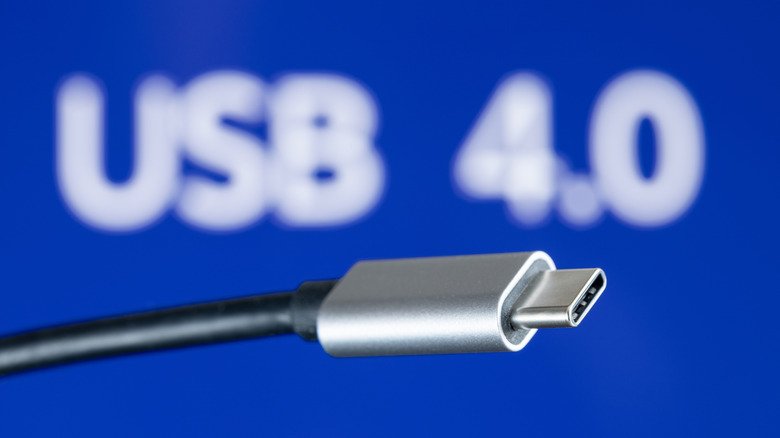
    USB-C cable in front of a blue USB 4.0 background.

    Power transmission is where only checking the connector on the box can become costly. Up to 240W is possible with USB Power Delivery, but the source, device and cable must all support that power level. The source advertises its capabilities and the connected device requests power before the higher-power contract is established. USB-IF requires USB-C-to-USB-C cables passing its compliance program to carry either a 60W or 240W power marking, and all except USB 2.0 cables must also show their supported data rate.

    For a given cable, those numbers may not be close at all. Anker offers a 10-foot USB-C cable with 240W charging support, but its data transfer speed tops out at 480Mbps. Icron’s 328-foot extender does the opposite: It supports up to 5Gbps, but offers just 6W per remote USB port. There’s no guarantee of fast data with fast charging, and vice versa.

    Passive USB-C male-to-female extensions need extra caution. C-to-C cables, Type-C-to-legacy cables and adapter assemblies are listed in USB-IF’s passive Type-C compliance document, while generic male-to-female Type-C extension cables are not. But that doesn’t mean USB extenders are illegal. 

    If you’re looking for USB4, display output or high-power charging, getting the USB-C connectors to fit together is just the beginning of the compatibility test. If the actual issue is that <a href="https://tooltechblog.com/a-tool-your-team-runs-or-a-service-that-runs-for-you/” title=”A tool your team runs, or a service that runs for you?”>your charger doesn’t reach the wall outlet, a properly rated AC extension cord may be cleaner for a temporary setup than extending the USB connection itself.

    extenders really safe They work
    Share. Facebook Twitter Pinterest LinkedIn Tumblr Email
    Tool Tech Team
    • Website

    Related Posts

    Microsoft’s Copilot app adds Office, natural coding and automation

    September 25, 2026

    Call of Duty: Warzone is adding a button to hide all the goofy skins

    September 25, 2026

    Xiaomi’s 18 Pro series phones have the latest Snapdragon chip and a Samsung-like privacy screen

    September 24, 2026

    Everything announced at Meta Connect 2026

    September 24, 2026

    One of the best Metroid games for the Switch is 30 percent off

    September 23, 2026

    The pros and cons of using a password manager over an authenticator app

    September 23, 2026
    Leave A Reply Cancel Reply

    Top posts
    Tech

    Microsoft’s Copilot app adds Office, natural coding and automation

    By Tool Tech Team
    Business Software

    For months, OpenAI’s agent swarms have been attacking online databases to find obscure facts

    By Tool Tech Team
    Web Hosting

    How to Build and Deploy a Production

    By Tool Tech Team
    Editors Picks

    Microsoft’s Copilot app adds Office, natural coding and automation

    September 25, 2026

    For months, OpenAI’s agent swarms have been attacking online databases to find obscure facts

    September 25, 2026

    How to Build and Deploy a Production

    September 25, 2026

    Lightspeed targets $250M for new India fund, focusing on early-stage AI

    September 25, 2026
    About Us

    Welcome to ToolTechBlog, your trusted source for the latest insights, reviews, and practical guides on AI tools, business software, cybersecurity, web hosting, and consumer technology.
    Our mission is simple: to help individuals, entrepreneurs, freelancers, students, and businesses discover the right digital tools to improve productivity, streamline workflows, and make informed technology decisions.

    Our Picks

    Microsoft’s Copilot app adds Office, natural coding and automation

    September 25, 2026

    For months, OpenAI’s agent swarms have been attacking online databases to find obscure facts

    September 25, 2026

    How to Build and Deploy a Production

    September 25, 2026
    Top Reviews

    The AI Hype Index: Unsexy AI

    July 29, 2026

    What it is and How to Fix it

    July 29, 2026

    LG to Ban Residential Proxies from Smart TV Apps

    July 29, 2026

    © 2026 tooltechblog.com. All rights reserved. Designed by DD.

    • About Us
    • Contact Us
    • Terms and Conditions
    • Privacy Policy
    • Disclaimer

    Type above and press Enter to search. Press Esc to cancel.