
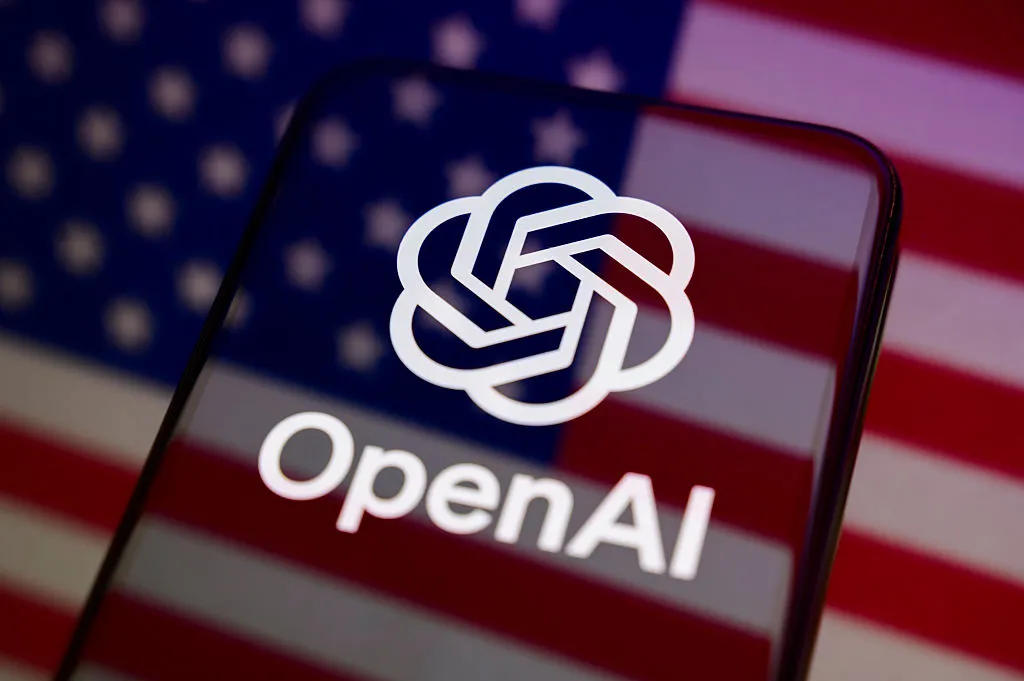
OpenAI’s chief global affairs officer Chris Lehane thinks the 2028 presidential election could be a defining moment for AI. And he wants politicians to start developing policies that address Americans’ concerns about the technology, rather than simply paying lip service to anti-AI sentiment and the backlash against data centers.
In anew essay, Lehane compares AI’s potential to reshape the economy to President Franklin D. Roosevelt’s New Deal, the 1930s set of federal programs and reforms enacted after industrialization and the Great Depression shattered the old economic order. He observes that Americans today feel similarly anxious about losing control over their economic futures and urges politicians to find a “compelling third path” that allows people to share in AI’s benefits. He lays out five policy priorities, spanning worker protections and education to AI safety and data center development.
The essay comes on the heels of a stunning Democratic victory in the midterm elections, in which Democrats flipped control of Congress amid widespread voter frustration over the cost of living. Kate Brennan, who leads AI and corporate power policy at the AI Now Institute, told TechCrunch that Lehane’s rhetoric marks a notable shift from OpenAI’s policy agenda last year, which focused on accelerating AI development, reducing regulatory barriers, and expanding infrastructure.
Unsurprisingly, many of Lehane’s proposals would encourage wider AI adoption and support the infrastructure expansion companies like OpenAI need to grow. The original New Deal established protections for workers and placed constraints on corporate power. It’s less clear how Lehane’s vision would hold AI companies accountable for the economic disruption their technology could create.
“Invoking a New Deal metaphor is to invoke state capacity to actually benefit the public,” Brennan said. “This is written by a private company that is trying to advocate for policies for its own benefit. It is ahistorical at best and harmful at worst.”
While AI wasn’t a dominant issue in the midterms, opposition to data centers emerged as a major bipartisan concern in several races in the midterms. And Lehane may be right that AI will become a bigger part of the conversation over the next two years.
Affordability is already shaping up as a key issue for the 2028 election as Americans grapple with inflation, tariffs, and the rising cost of living. AI could become an increasingly large part of that conversation as voters stress about data centers hiking up electricity bills, AI replacing their jobs, and technology’s economic gains flowing only to a handful of wealthy companies.
Lehane acknowledges many of these concerns, but he offers few concrete proposals to prevent AI’s gains from becoming concentrated. Instead, he largely pitches AI as a path to greater prosperity for Americans willing to embrace it.
Take his proposals for the tax code. He suggests incentives for workers to learn AI skills, easier capital access for entrepreneurs, and new approaches to employee ownership and profit-sharing. Those are not the same as binding requirements that would ensure workers share in AI-generated wealth or that companies pay the costs of displacing workers.
“I was struck by how much of this policy is for a future…that is already predicated on mass AI adoption and AI benefitting society, which we have yet to see,” Brennan said. “All of it is predicated on benefitting from AI’s upside.”
Brennan said it would make more sense to see things like a revised corporate tax rate or tax incentives for hiring human beings rather than automating jobs, as well as ways to keep companies from amassing outsize market power.
Lehane’s emphasis on expanding AI’s economic opportunities, rather than limiting potential harms, extends to data centers. He notes concerns about data centers while emphasizing the construction jobs and local tax revenue they could generate. He then warns that politicians who support a data center moratorium could jeopardize America’s lead over China, going so far as to compare that stance to the 2002 vote to authorize the Iraq war.
Lehane also makes child safety and education central to his proposed agenda, stressing the importance of age-appropriate protections andsafeguards around AI companions for minors. He also warns against keepingAI out of classrooms, arguing that doing so could lead to inequality between wealthy students and “children in rural communities.” But the argument takes for granted that AI improves learning, a claim that remains unproven and one critics say deserves more examination than more funding or individualized attention from human teachers.
Lehane also calls forenforceable AI safety standards, independent evaluations, public oversight, and the ability to restrict AI systems or use a kill switch to shut them down — thoughrecent studies show that OpenAI and other AI labs haven’t published comprehensive plans for what they would do if a model escaped human control.
Brennan called these stances “disingenuous,” pointing to OpenAI’s history of opposing legislation designed to impose such measures. In 2024, for example, OpenAI opposed California’s AI safety bill, SB 1047, which would have mandated catastrophic risk evaluations and shutdown capabilities. Last year, OpenAI alsosought to limit state regulation, arguing that states could undermine American innovation. The company has more recently shifted some of those positions, backing several state safety laws and saying it would be open to independent evaluators embedded in the company.
Lehane also argues that people should maintain control over consequential decisions made using AI, rather than handing off judgment entirely to machines.But that raises the question of what human control really looks like in a society where humans are increasingly being required to use AI in education, work, health care, and government.
Throughout his essay, Lehane frames AI as a technology that could give Americans back their sense of agency and economic opportunity. But he ties average Americans’ “middle class” success to participation in an economy increasingly shaped by companies like OpenAI. Whether his policies will meaningfully redistribute power or subtly entrench it is less clear.
TechCrunch reached out to OpenAI for more specifics on Lehane’s proposals and the company’s stances, but it did not respond by the time of publication.
