



Follow ZDNET:Add us as a preferred
ZDNET’s key takeaways
- If you want a gorgeous GNOME desktop, install Aura Glass.
- This glassy desktop can be installed on GNOME 48, 49, and 50.
- Aura Glass is supported on Ubuntu, Debian, Fedora, Arch, and CachyOS.
I love a beautiful desktop. In fact, I go to great lengths to beautify my desktops, no matter the environment. Whether it’s COSMIC (my current default), KDE Plasma, or Hyprland, I spend time customizing the desktop so it aligns with my aesthetic.
To date, however, GNOME has felt behind the curve in the looks department. I get that, because GNOME strives to be a minimal-looking desktop with maximal usability. But should that preclude GNOME from looking good?
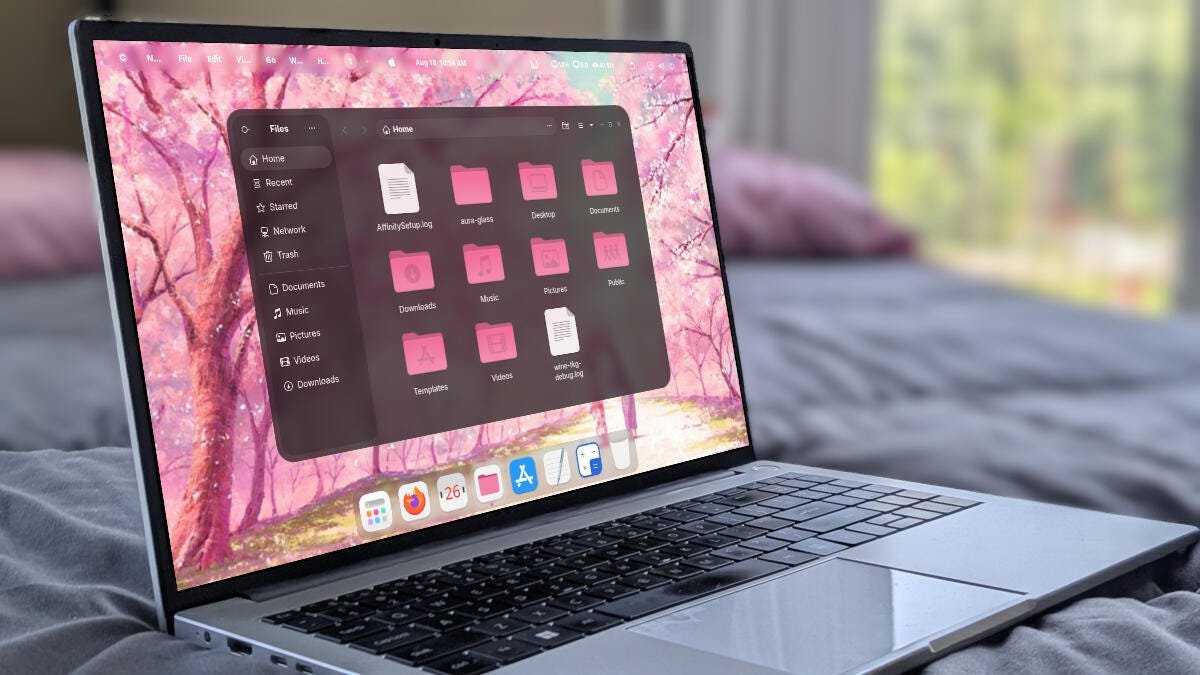
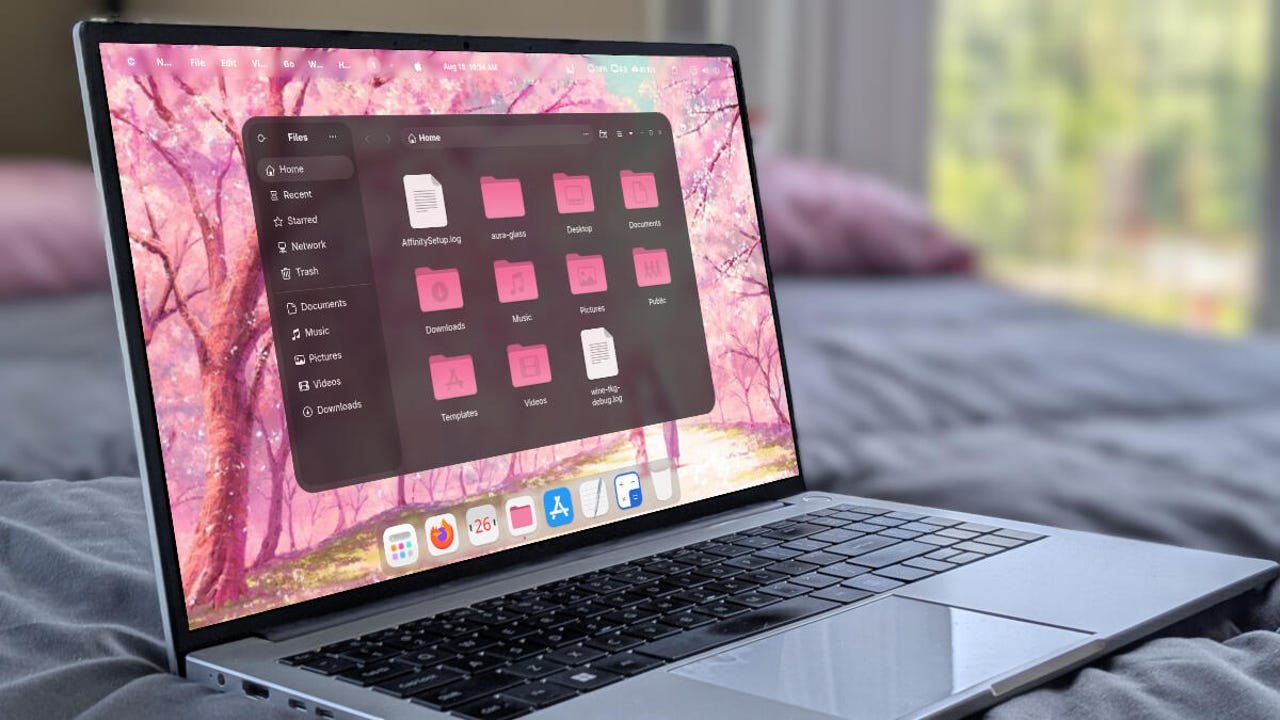
So, when I learned about efforts to give GNOME an Apple-like glassy look, I was genuinely thrilled. Now, post installation, I am stunned by how gorgeous it is.
Also: How to make your GNOME desktop look like Windows 11 (if that’s your jam)
This new look is called Aura Glass, which should surprise no one, given the current crop of names, such as Liquid Glass and COSMIC’s Frosted Glass. What did surprise me, however, was how much this new look changed the GNOME desktop. Aura Glass brings a dramatic change to GNOME, and I’m all for it. In fact, this is the most beautiful take on GNOME I’ve ever seen.
What Aura Glass brings to GNOME includes:
- Dynamic frosted glass
- True background blur
- Adaptive accent colors
- Optional app window blur
- Distraction-free volume and brightness pill
- GDM login screen theming
- Lightweight “No Blur” mode
- Zero system bloat
I installed Aura Glass, opting for the full Monty of features. I did find a noticeable hit on performance; however, I was running GNOME as a virtual machine with only 3 GB of RAM and 2 CPU cores. Give it at least twice the amount of RAM and cores, and you’ll hardly notice it (which is impressive, given how much blur it adds).
Also: 5 quick tweaks make your GNOME desktop so much easier to use
Anyone who uses GNOME as their default desktop and is looking to punch up the look should definitely give Aura Glass a try.
How to achieve Aura Glass
Aura Glass is installable on GNOME 48, 49, and 50, prefers Wayland (although X11 is supported with fallback blur), and is compatible with GNOME on Arch, CachyOS, Fedora, Ubuntu, and Debian. I tested Aura Glass on Fedora 44 running GNOME 50.
Installing Aura Glass is done from the command line and requires Git. Before you can install Aura Glass, you have to install Git, which can be done with one of the following commands:
Ubuntu/Debian – sudo apt-get install git -y
Fedora – sudo dnf install git -y
Arch/CachyOS – sudo pacman -S git
Once Git is installed, clone the Aura Glass repository with:
git clone https://github.com/DevWebeloper/aura-glass.git
Change into the newly created directory with:
Run the installation script with:
At this point, you’ll be presented with a text-based installation wizard.
Here are the options you’ll configure in the wizard:
- Accent Color – choose between 9 different colors)
- Blur & Visual Depth – Frosted Glass or Solid Mode
- App Window Blue Target – (only GTK/GNOME apps, all apps, or no blur)
- Choose Window Transparency Level – (99%, 95%, or 82%)
- Icons & Cursors (Colloid, Reversal, or Keep current system icon theme)
- Cursor Theme (Stock Adwaita, MacTahoe, or Keep current cursor theme)
- Shell Extensions (Mandatory Core)
- Optional Extensions Package (Recommended Pack, Full Suite, Custom Selection, or Minimal)
- GDM Login Screen Theme (Theme GDM login screen with Aura Glass)
- Sync primary monitor to GDM login screen (only for dual monitor setups)
The last window asks you to review your selections and either proceed with the installation (Y) or cancel the installation (N).
Also: I tested Omarchy Quattro, one of the first Linux distros to go all in on AI – and I didn’t hate it
From start to finish, the installation should take between 5 and 10 minutes (there are a lot of dependencies to download and install). When it is completed, you’ll be asked to log out (type Y and hit Enter).
You should immediately see that the login screen has changed (if you opted to theme GDM with Aura Glass during installation).
Once you log in, you’ll be greeted by your newly beautified GNOME desktop. Open some apps and see it in action.
Congratulations, you’ve just seriously leveled up the aesthetics of your GNOME desktop.
Open Source
How AI has suddenly become much more useful to open- unlocks powerful local AI – even on phones
Why AI is both a curse and a blessing to open-al that’s local, open
- How AI has suddenly become much more useful to open-source developers
- Google’s Gemma 4 model goes fully open-source and unlocks powerful local AI – even on phones
- Why AI is both a curse and a blessing to open-source software – according to <a href="https://tooltechblog.com/integration-guide-for-developers-2026/” title=”Integration Guide for Developers (2026)”>developers
- I tried a Claude Code rival that’s local, open source, and completely free – how it went
